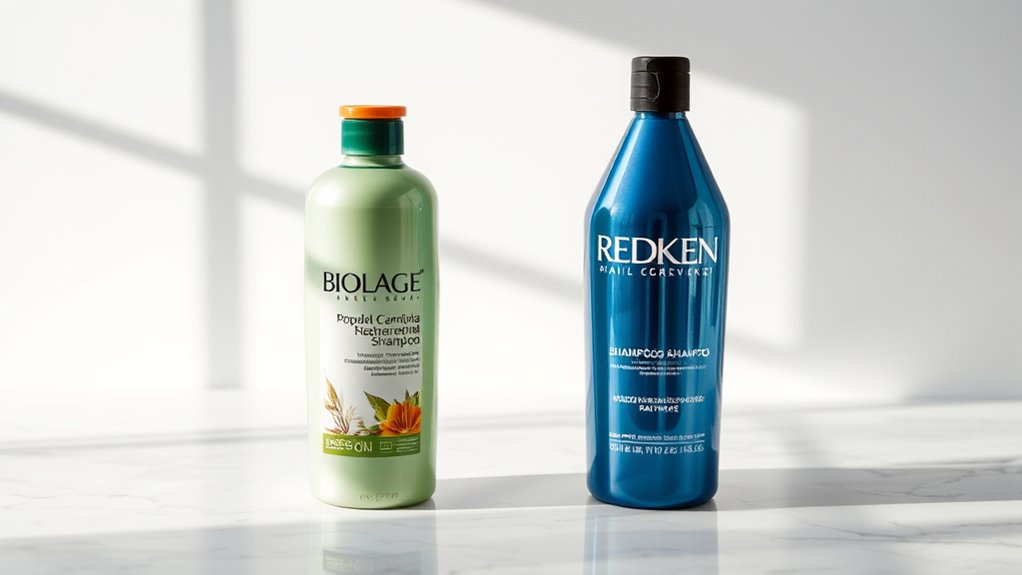
Biolage Vs Redken
If you want natural, eco-friendly haircare that gently hydrates and soothes your scalp, Biolage is a great pick. Biolage Vs Redken is a common consideration for those seeking quality haircare products. But if you need professional, science-driven formulas targeting specific hair issues like damage or volume, Redken offers advanced solutions.
Biolage focuses on plant-based ingredients, while Redken uses cutting-edge protein technology. Your choice depends on whether you prefer gentle, natural care or salon-quality treatment. There’s plenty more to evaluate about how each brand suits your hair needs.
Key Takeaways
- Biolage focuses on natural, plant-based ingredients and eco-conscious formulations, while Redken emphasizes science-backed, protein-rich formulas for targeted hair care.
- Redken offers a broader range of professional-grade treatments for specific hair concerns like damage repair and volume, compared to Biolage’s gentle, nature-inspired lines.
- Biolage products tend to be more affordable and ideal for sensitive scalps and natural hair, whereas Redken commands a premium price for salon-quality innovation.
- Both brands address damage and hydration, with Biolage’s HydraSource and Redken’s All Soft lines catering to different preferences for natural versus advanced repair.
- Choosing between Biolage and Redken depends on whether consumers prioritize eco-friendly, gentle care or professional, scientifically formulated solutions for diverse hair needs.
Brand Histories and Philosophies
When you compare Biolage and Redken, you’re looking at two brands with distinct origins and core philosophies. Redken was founded in 1960 by chemist Jheri Redding and actress Paula Kent, focusing on a scientific approach to haircare. Its brand history highlights a commitment to professional salon-quality products, and since joining L’Oréal in 1993, it has emphasized combining protein, moisture, and an acidic pH to promote healthy hair.
On the other hand, Biolage was introduced in 1990 by Arnie Miller, inspired by bio-science and nature. Its brand history centers on sustainability and eco-consciousness, using natural ingredients and bio-inspired technology to support both hair health and the environment.
Both brands have innovated in their own ways—Redken through advanced formulations for salon results, and Biolage through plant-based, environmentally friendly products. Understanding their brand histories helps you appreciate how their philosophies shape their distinct product lines and values.
Key Ingredients and Formulation Differences
Although both Biolage and Redken aim to improve hair health, you’ll notice their ingredient choices reflect very different priorities. Biolage products emphasize natural, plant-derived key ingredients like lemongrass and sage, focusing on gentle cleansing and hydration.
Biolage prioritizes natural, plant-based ingredients for gentle cleansing and hydration in hair care.
In contrast, Redken products highlight scientifically driven formulations with proteins, amino acids, and keratin derivatives to strengthen and repair hair.
When comparing their shampoo and conditioner formulations, consider these differences:
- Biolage uses sulfate-based surfactants for effective cleansing, while Redken often opts for sulfate-free formulas with milder agents to protect hair integrity.
- Redken includes conditioning agents such as wheat protein and argan oil for targeted repair, whereas Biolage relies on botanical extracts and lower pH levels for scalp and hair balance.
- The overall formulation approach: Biolage leans toward sustainability and natural ingredients; Redken focuses on advanced science to address specific hair concerns.
Knowing these distinctions helps you choose the products best suited for your hair needs.
Product Range and Target Hair Types
Both Biolage and Redken offer diverse product lines designed to meet various hair needs, but their approaches differ. Biolage focuses on natural ingredients and sustainability, targeting specific concerns like color protection and scalp health.
Redken emphasizes innovation and professional-grade solutions for a wide range of hair textures and styling needs. Here’s a quick look at their product range and target hair types:
| Brand | Product Range Highlights |
|---|---|
| Biolage | COLOR LAST, HYDRA SOURCE, scalp health; natural ingredients; eco-friendly |
| Redken | All Soft, Extreme, Volume Injection; tailored for fine, curly, damaged hair; tech-driven innovation |
You’ll find Biolage suits you if you prefer eco-conscious products addressing particular hair issues, while Redken is ideal if you want cutting-edge formulas designed for versatile styling and strengthening different hair types.
Performance and User Experience
How do Biolage and Redken really perform in your daily hair care routine? When it comes to performance and user experience, your choice depends largely on what your hair needs most. Biolage excels if you want gentle cleansing and hydration, perfect for sensitive scalps.
Biolage stands out for gentle cleansing and hydration, ideal for those with sensitive scalps.
Redken, on the other hand, offers professional-grade formulations that deliver targeted results like volume and repair.
Here’s what you can expect:
- Biolage gives you a lightweight feel, focusing on scalp health and hydration, which soothes and nurtures your hair naturally.
- Redken provides a richer lather and immediate visible effects like enhanced volume and shine, ideal if you want styling benefits.
- Your experience varies based on hair type—Biolage suits natural, sensitive hair, while Redken shines if you need extra styling or damage repair.
Price Comparison and Value for Money
When comparing Biolage and Redken, you’ll notice Biolage offers more affordable options, typically ranging from $23 to $48 per bottle.
Redken’s prices can be much higher, especially for their specialized professional formulas. You’ll want to weigh the cost against what each brand delivers to decide which gives you better value for your hair care needs.
Cost Differences Overview
Although Biolage shampoos generally cost less, ranging from $23 to $48 per bottle, Redken products can be considerably pricier, with prices between $33 and $208 depending on the line and size.
When comparing cost differences, you’ll notice:
- Biolage fits well if you’re budget-conscious, offering natural ingredients and hydration without breaking the bank.
- Redken’s pricing reflects its premium quality, professional-grade formulas, and advanced technology.
- Choosing between them depends on whether you prioritize affordability or specialized, salon-quality haircare products.
If you want solid quality without high costs, Biolage is a smart choice. But if you’re after targeted treatments and innovation, Redken’s higher price tags align with its superior formulations.
Understanding these pricing strategies helps you balance budget and quality effectively.
Product Value Assessment
Since budget and quality both matter, evaluating the product value between Biolage and Redken helps you decide which fits your needs best. Biolage offers a more affordable range, typically $23 to $48, with plant-based ingredients like Citric Acid that gently balance hair’s pH while cleansing. This makes Biolage a solid choice if you want natural, sulfate-free options without overspending.
On the other hand, Redken’s prices range from $33 to $208, reflecting its salon-grade formulas packed with advanced ingredients. While pricier, Redken’s concentrated products deliver high-performance results, justifying the cost for many professionals.
Sustainability and Ethical Practices
How do Biolage and Redken compare regarding sustainability and ethical practices? If sustainability matters to you, you’ll appreciate how both brands take it seriously, but in different ways. Biolage leans heavily on natural-origin ingredients and eco-friendly packaging, embracing a bio-science-inspired ethos.
Redken focuses on cruelty-free testing and transparency, though it’s tied to L’Oréal, which has faced some criticism over sustainability.
Here’s how they stack up:
- Biolage champions recycling programs and cuts water use during production, reinforcing its eco-conscious mission.
- Redken is reducing plastic waste and adding more naturally derived ingredients, endeavoring to improve its sustainability footprint.
- Both aim to attract eco-conscious users, but Biolage highlights plant-based ingredients and greener packaging more prominently.
Recommendations Based on Hair Concerns
When you’re choosing between Biolage and Redken, the best option often depends on your specific hair concerns. For fine or thin hair, Redken’s Volume Injection offers lightweight lift, while Biolage’s natural volumizing shampoos, sometimes enriched with coconut oil, add fullness gently.
If your hair is damaged or chemically treated, Redken’s All Soft repair line or Olaplex works wonders, whereas Biolage’s HydraSource focuses on hydration and scalp health. For oily scalps, both brands have targeted solutions to balance oiliness effectively.
| Hair Concern | Biolage Recommendation | Redken Recommendation |
|---|---|---|
| Fine/Thin Hair | Volumizing shampoos with coconut oil | Volume Injection lightweight formulas |
| Damaged Hair | HydraSource hydration line | All Soft repair line |
| Oily Scalp | BOND THERAPY cleansing | Scalp-specific shampoos |
Choosing depends on whether you prefer natural ingredients or salon-grade formulas tailored to your hair’s needs.
Frequently Asked Questions
Do Hair Stylists Recommend Biolage?
Yes, many hair stylists do recommend Biolage. You’ll find they love it for its natural, plant-based ingredients and eco-friendly approach.
If you’re looking for hydration or color protection, especially for dry or color-treated hair, Biolage often comes highly recommended. Plus, it offers a variety of products tailored to specific hair concerns, so you can address issues like scalp health or damage repair effectively.
It’s a solid choice for healthy hair.
Is Biolage Actually Good for Hair?
Yes, Biolage can be good for your hair, especially if you prefer products with natural ingredients and want to maintain scalp health. It’s great for hydration and color protection, but you’ll want to be cautious if your hair is very fragile or chemically treated since some formulas contain sulfates that might dry it out.
If you have fine or oily hair, you’ll likely appreciate how it cleanses without weighing your hair down.
Is Redken Considered Salon Quality?
Absolutely, Redken is definitely considered salon quality. You’ll find its professional-grade products packed with powerful, proven ingredients designed to deliver dazzling results.
When you use Redken, you’re tapping into technology trusted by top stylists worldwide, ensuring your hair gets strength, shine, and smoothness. It’s no surprise that experts consistently recommend Redken for reliable, radiant hair care that performs perfectly, just like in a high-end salon setting.
What Is the Lawsuit Against Biolage Hair Products?
The lawsuit against Biolage hair products involves claims that some of their items caused scalp irritation, allergic reactions, or hair damage in certain users. People argue the products might contain ingredients unsuitable for sensitive skin or specific hair types, and that the labeling didn’t properly warn about potential side effects.
While no class-action lawsuit is confirmed, some individuals have filed cases, and the company maintains confidence in their product safety.
Conclusion
Choosing between Biolage and Redken is like picking the perfect garden for your hair—Biolage offers nature’s gentle touch with plant-inspired ingredients, while Redken brings the precision of a modern lab to every strand.
Whether you want nourishing softness or targeted repair, both brands bloom beautifully. So, picture your hair thriving, vibrant and healthy, as you decide which brand’s unique blend will best cultivate your personal hair paradise.
In the end, choosing Biolage vs Redken depends on your hair goals and preferences, making either a wonderful choice for your hair care journey.