How to Take off Dip Powder Nails Without Acetone
You can remove dip powder nails without acetone by soaking them in warm, soapy water or a warm oil-and-water mix for 20–30 minutes to soften the layers. This gentle method helps loosen the dip powder without harsh chemicals.
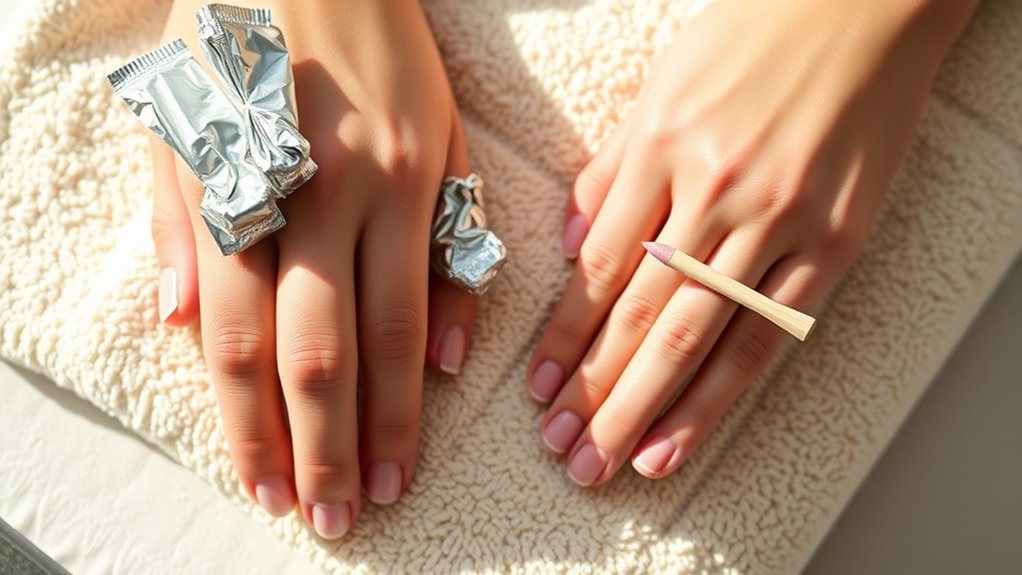
After soaking, gently buff or push off the dip powder with a wooden stick, being careful not to damage your natural nails. Take your time during this process to avoid causing any harm.
Keep your nails hydrated before and after to prevent brittleness. Using cuticle oil or hand cream can help maintain nail health.
If you want to learn safer steps and aftercare tips that protect your nails, keep exploring.
Key Takeaways
- Soak nails in warm, soapy water or a warm oil-and-water mixture for 20-30 minutes to soften the dip powder gently.
- Gently buff the top layer with a coarse file to break the seal and improve softening agent absorption without over-filing.
- Use a wooden cuticle stick or orangewood stick to carefully push off the softened dip powder without peeling or forcing.
- Repeat soaking and gentle scraping as needed to fully remove dip powder, avoiding aggressive tools or excessive filing.
- After removal, hydrate nails and cuticles with nourishing oils or creams and avoid harsh buffing to maintain nail health.
Reasons to Avoid Using Acetone for Dip Powder Removal
Although acetone is a common choice for removing dip powder nails, you might want to avoid it because it can dry out and weaken your natural nails, especially if you use it often or soak for too long. Acetone strips away natural oils, leaving your nails brittle and prone to nail damage. Over time, frequent exposure can cause your nail beds to become thin and fragile, making it harder for your nails to grow strong.
If you have sensitive skin or conditions like eczema or psoriasis, acetone can worsen irritation, causing redness and peeling around the nail area. Extended soaking only increases these risks, leading to discomfort and potential long-term harm. Choosing gentler removal methods that don’t rely on harsh chemicals like acetone helps protect your natural nails and keeps them healthier.
Preparing Your Nails for Acetone-Free Removal
Before you start removing your dip powder nails without acetone, make sure to cleanse them thoroughly to remove any dirt or oils. Gather softening ingredients like warm soapy water and nourishing oils to help loosen the dip powder gently.
Don’t forget to protect the skin around your nails with cuticle oil to keep it hydrated and prevent irritation during the process.
Cleanse Nails Thoroughly
When you cleanse your nails thoroughly with warm, soapy water, you remove surface oils and dirt that could block removal treatments from working effectively. To prepare nails for acetone-free dip powder removal, follow these steps:
- Soak your fingertips in warm, soapy water for 5-10 minutes to soften and purify nails, helping remove surface oils.
- Gently buff the top layer of dip powder to create a slightly rough surface that allows softening agents to penetrate better.
- Wipe each nail with alcohol or a nail cleanser to remove any leftover oils, lotions, or debris that might prevent treatments from working.
These steps ensure you properly cleanse nails and prepare nails for the next phase of removal, improving the effectiveness of acetone-free methods.
Gather Softening Ingredients
After cleansing and gently buffing your nails, the next step is to gather ingredients that will help soften the dip powder without acetone. One effective method is to soak nails in a mixture of warm water and olive oil for 15-20 minutes. This combo hydrates and gently loosens the dip powder, making removal easier.
You can also soak nails in warm soapy water for 20-30 minutes to help break down the powder naturally. Applying cuticle oil or coconut oil after soaking adds an extra layer of softness, protecting your nails during removal.
Protect Surrounding Skin
Since your skin can easily become irritated during dip powder removal, it’s important to safeguard the area around your nails by applying petroleum jelly or cuticle oil. This barrier helps shield the delicate nail bed and surrounding skin from harsh treatments.
To prepare effectively:
- Clean and dry your nails thoroughly to avoid trapping bacteria under the dip powder.
- Apply cuticle oil or petroleum jelly generously around each nail to protect surrounding skin from dryness and irritation.
- Gently push back your cuticles with a cuticle stick to prevent skin tears while softening or removing the dip powder.
Keeping the skin moisturized and protected ensures a safer, more comfortable acetone-free nail removal process.
Soaking Dip Powder Nails in Warm Soapy Water
If you want to avoid harsh chemicals, soaking your dip powder nails in warm soapy water for 20 to 30 minutes can help loosen the layers effectively. This method softens the dip coating, making it easier to remove without acetone. Using warm soapy water with a gentle cleanser or dish soap enhances the breakdown of oils and residue.
After soaking, you can gently push off the softened dip with a wooden cuticle stick, reducing damage to your natural nails. Remember to moisturize your nails and cuticles afterward to restore hydration, as prolonged water exposure can cause dryness.
| Step | Purpose | Tips |
|---|---|---|
| Prepare warm water | Soften dip coating | Use comfortably warm, not hot |
| Add gentle soap | Break down oils and residue | Use dish soap or mild cleanser |
| Soak nails | Loosen dip layers | 20-30 minutes recommended |
| Gently push off dip | Remove softened layers | Use wooden cuticle stick |
| Moisturize nails | Prevent dryness | Apply cuticle oil or hand cream |
Using Nail Buffers and Files to Loosen Dip Powder
To start loosening your dip powder nails, gently buff the top shiny layer with a coarse nail file to break the seal. Then, switch to a finer file or buffer to smooth the surface and prep it for softening.
Be careful to file along the edges without damaging your natural nails, using controlled strokes to avoid over-filing.
Proper Filing Techniques
Although it might be tempting to file aggressively, you’ll want to use a coarse nail file (around 100 grit) to gently buff the top shiny layer of your dip powder nails. This creates a matte surface, helping the removal solution penetrate better without harming your natural nails.
Here’s how to file and buff properly:
- File in a back-and-forth motion with gentle pressure, focusing on breaking up the top coat rather than filing through all layers.
- Check your progress often to avoid over-filing or thinning your natural nails.
- After buffing the top layer, switch to a finer buffer to smooth the surface, preparing it for soaking or other removal steps.
Effective Buffing Methods
Once you’ve gently filed away the shiny top layer of your dip powder nails, buffing becomes the next step to further loosen the coating. Using a coarse nail buffer, you want to lightly buff the entire nail surface. This buffing increases the porosity of the dip powder, allowing softening agents like oils or creams to penetrate more effectively.
Be consistent but gentle to avoid damaging your natural nails. After buffing with a coarse grit, switch to a finer buffer to smooth out any rough edges, reducing the risk of snagging or tearing during removal. This method not only helps soften the dip powder but also minimizes the need for harsh chemicals, making the removal process safer and more comfortable for you.
Applying Oil and Warm Water Mixtures to Soften Nails
When you mix warm water with nourishing oils like coconut or olive oil, you create a gentle solution that softens dip powder nails without harsh chemicals. This method lets you soak your nails comfortably while protecting their natural strength. The warm water boosts circulation, helping your nails absorb the oil’s moisturizing benefits.
To effectively apply this method:
- Combine equal parts warm water and your chosen oil in a small bowl.
- Soak your nails in the mixture for 20-30 minutes, allowing the dip powder to loosen.
- After soaking, gently push off the softened dip with a wooden stick to avoid damaging your natural nails.
Regularly using this oil and warm water soak not only softens dip powder nails but also maintains hydration, reducing brittleness during removal. This simple, acetone-free approach keeps your nails healthy and smooth throughout the process.
Removing Dip Powder Nails With Isopropyl Alcohol
If you want a gentler way to remove dip powder nails without acetone, soaking them in isopropyl alcohol is a solid option. Using 70% or higher isopropyl, soak your nails for about 30 minutes. This won’t dissolve the dip powder, but it loosens the bonds, making it easier to remove dip nails without harsh chemicals.
After soaking, gently buff or scrape the softened layer with a nail pusher or orangewood stick. It takes more patience than acetone, but it minimizes damage to your nails and skin.
| Step | Action | Notes |
|---|---|---|
| 1 | Prepare isopropyl solution | Use 70% or higher concentration |
| 2 | Soak nails | Soak for ~30 minutes |
| 3 | Check softness | Dip powder should feel softened |
| 4 | Gently buff or scrape | Use nail pusher or orangewood stick |
| 5 | Repeat if needed | Longer soaking may be necessary |
Common Mistakes to Avoid When Removing Dip Nails Without Chemicals
Although removing dip nails without chemicals can be gentler on your nails, it’s important to avoid common mistakes that can cause damage. Using hot water alone might seem like a natural method, but without proper soaking and preparation, it won’t effectively loosen the dip powder layers.
Also, aggressive use of a nail file can harm your natural nails, leading to peeling or splitting. Here are three common mistakes to watch out for:
- Over-filing: Using a nail file too harshly can thin your nails, causing side effects like sensitivity and breakage.
- Peeling or picking: Trying to peel off dip nails risks ripping layers of your natural nail, increasing infection risk.
- Skipping prep: Not softening the dip powder properly before removal lessens effectiveness and can cause uneven removal.
Avoiding these mistakes ensures your nails stay healthy while you remove dip powder without chemicals.
Tips for Maintaining Healthy Nails After Removal
Since your nails may feel fragile after removing dip powder, maintaining proper hydration by applying nourishing oils or creams daily is vital to prevent dryness and brittleness. To keep your nails at home without harsh chemicals looking their best, make certain to hydrate your nails and cuticles regularly. Avoid aggressive buffing or filing, as this can thin and weaken the natural nail plate.
Instead, opt for a gentle strengthening base coat or nail treatment to rebuild and reinforce healthy nails over time. Also, give your nails a break between manicures to let them recover and breathe, which helps reduce the risk of damage.
Finally, support nail health from within by eating a balanced diet rich in biotin, keratin, and essential vitamins. Following these tips will guarantee your nails remain strong, resilient, and healthy after dip powder removal.
Frequently Asked Questions
What Is the Fastest Way to Take off Dip Nails at Home?
The fastest way to take off dip nails at home is by gently buffing the top coat first to break the seal, then soaking your nails in warm, soapy water or isopropyl alcohol for 20-30 minutes.
After soaking, use a wooden cuticle stick to carefully lift the softened dip powder. Applying cuticle or coconut oil before soaking helps speed up the process and protects your nails from damage as you remove the layers.
What Dissolves Dipped Nails?
What dissolves dipped nails is primarily acetone, which breaks down the polymer bonds in the dip powder. If you don’t have acetone, isopropyl alcohol or alcohol-based products can soften them but won’t fully dissolve the nails.
Warm water mixed with oil can help loosen the powder, but it won’t completely remove it. For effective and safe removal, you’ll need a solvent specifically designed to break down dip powders, usually containing acetone or similar chemicals.
What Is a Good Substitute for Acetone?
If you don’t have acetone, you can try isopropyl alcohol, hand sanitizer, or mouthwash as substitutes. They won’t work as fast, they won’t work as powerfully, and they won’t work as easily as acetone.
But if you soak your nails in these for about 30 minutes, you’ll start to see the dip powder soften. Just be patient, keep your nails wrapped, and follow up with moisturizing oils to keep your skin healthy.
Will Dawn Dish Soap Take off Fake Nails?
No, Dawn dish soap won’t take off fake nails. While it might help clean your nails or loosen surface dirt, it can’t dissolve or break down the acrylic or dip powder.
If you try using it alone, you’ll likely end up damaging your natural nails by scraping or peeling. For safe removal, you’ll want to use acetone, a special remover, or visit a professional instead of relying on dish soap.
Conclusion
Removing dip powder nails without acetone is like gently peeling a delicate flower petal—patience and care are your best tools. By soaking, buffing, and nourishing your nails with oils and warm water, you’ll avoid harsh chemicals while keeping your nails healthy and strong.
Remember, slow and steady wins the race; treating your nails kindly guarantees they’ll bloom beautifully for your next manicure adventure. Stay gentle, and your nails will thank you.
For the best results, always follow these steps when you want to take off dip powder nails without acetone, ensuring a safe and gentle removal process.