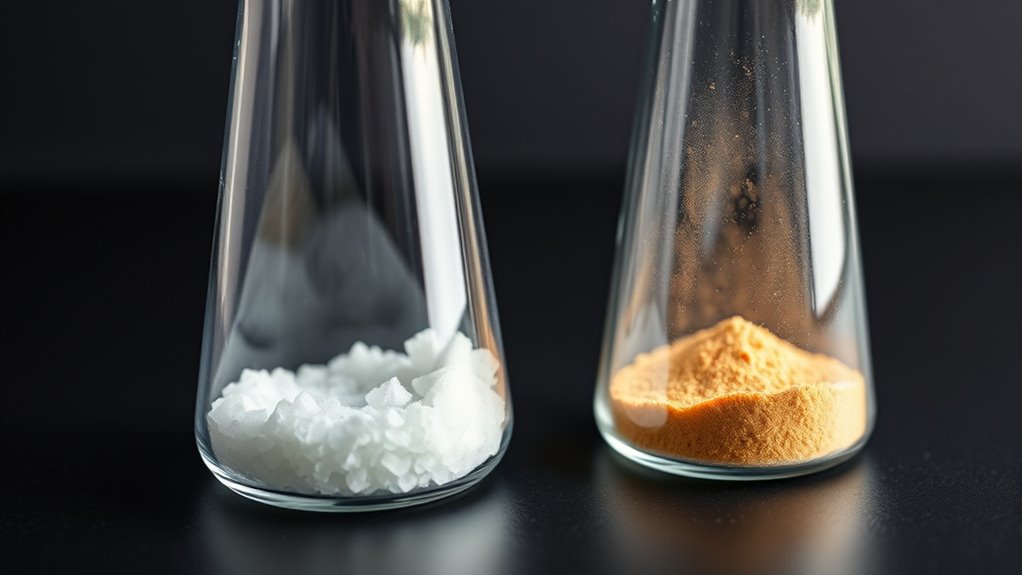
Stearic Acid Vs Salicylic Acid
If you want to protect and nourish your skin’s barrier, stearic acid is key—it softens skin and locks in moisture without irritation. Stearic acid is essential for maintaining healthy skin hydration.
On the other hand, salicylic acid dives deep to clear pores, exfoliate, and fight acne, making it great for oily or break-out-prone skin. Salicylic acid works by penetrating the pores to remove dead skin cells and prevent blemishes.
While stearic acid supports hydration, salicylic acid targets blemishes through exfoliation. Keep going to uncover how each acid fits different skin types and how to use them safely.
Key Takeaways
- Stearic acid is a long-chain fatty acid that acts as an emollient and barrier supporter, while salicylic acid is a beta hydroxy acid exfoliant targeting pores.
- Stearic acid moisturizes and stabilizes skincare formulations; salicylic acid exfoliates dead skin cells and reduces acne-causing bacteria.
- Stearic acid suits sensitive and dry skin by enhancing barrier function, whereas salicylic acid is ideal for oily, acne-prone skin due to pore-clearing properties.
- Salicylic acid may cause dryness or irritation if overused; stearic acid is generally safe and non-irritating for all skin types.
- Stearic acid is found in moisturizers and cleansers for hydration, while salicylic acid is common in acne treatments like serums and spot treatments.
Understanding Stearic Acid in Skincare
What makes stearic acid a staple in many skincare products? It’s a saturated long-chain fatty acid found naturally in animal fats and plant oils like cocoa and shea butter. In skincare, stearic acid acts as an effective emulsifier, helping blend ingredients smoothly while thickening and stabilizing formulations.
It also serves as an emollient, softening and smoothing your skin. One of its key benefits is supporting your skin barrier by forming a protective barrier that locks in moisture and shields against environmental damage. Because it’s gentle, stearic acid suits all skin types—even sensitive skin—without causing irritation or flakiness.
You’ll often find it in creams, cleansers, and soaps, where it enhances texture and ensures even application. By reinforcing the skin barrier and providing hydration, stearic acid helps maintain healthy skin, making it a trusted ingredient in many skincare products.
Properties and Benefits of Salicylic Acid
How does salicylic acid work so effectively for acne-prone skin? This beta hydroxy acid (BHA), derived from willow bark, is oil-soluble, so it penetrates deep into your pores. It exfoliates dead skin cells and unclogs pores, which helps reduce blackheads and breakouts.
Plus, salicylic acid has anti-inflammatory and antibacterial properties that calm redness and prevent future flare-ups. Using products with 0.5% to 2% salicylic acid regularly can improve your skin texture and keep acne at bay.
| Property | Benefit | Effect on Skin |
|---|---|---|
| Exfoliates dead skin cells | Removes buildup | Smoother skin texture |
| Unclogs pores | Clears blackheads & acne | Fewer breakouts |
| Anti-inflammatory | Reduces redness | Calmer skin |
| Antibacterial | Kills acne-causing bacteria | Prevents new breakouts |
Salicylic acid is a powerful ally for managing acne-prone skin effectively.
Differences in Chemical Structure and Function
When comparing stearic acid and salicylic acid, you’ll notice their molecular structures are quite different—one’s a long-chain fatty acid, the other an aromatic beta hydroxy acid. These structural differences shape how they work on your skin, with stearic acid mainly moisturizing and stabilizing, while salicylic acid exfoliates and targets pores.
Understanding these distinctions helps you choose the right ingredient based on your skincare needs.
Molecular Structure Comparison
Although both stearic acid and salicylic acid are commonly found in skincare products, their molecular structures are quite different, which directly impacts how they function. Stearic acid is a long-chain saturated fatty acid with an 18-carbon hydrocarbon chain attached to a carboxyl group, giving it emollient properties that help moisturize and stabilize formulations.
In contrast, salicylic acid features a benzene ring with a phenolic ring structure, including a hydroxyl group ortho to the carboxyl group. This unique molecular structure grants salicylic acid its keratolytic ability, allowing it to exfoliate skin effectively. Understanding these differences in molecular structure clarifies why stearic acid primarily serves as a fatty acid emollient, whereas salicylic acid functions mainly as an exfoliant and pore cleanser in skincare.
Mechanism of Action
Because stearic acid and salicylic acid differ so much in chemical structure, they work in very different ways on your skin. Stearic acid, with its large molecular size, acts mainly as an emulsifier and cleanser that supports your skin’s barrier without skin penetration. It forms a protective layer, providing barrier support and gentle cleansing without exfoliation.
In contrast, salicylic acid is a small molecule beta hydroxy acid (BHA) that penetrates deeply into pores. Its oil-soluble nature allows effective pore penetration, enabling exfoliation by breaking down dead skin cells inside the pores. Additionally, salicylic acid offers anti-inflammatory benefits, reducing redness and irritation.
Skin Targeting Differences
Since stearic acid and salicylic acid have distinct chemical structures, they target your skin in very different ways. Stearic acid, a long-chain saturated fatty acid, acts mainly as an emulsifier and moisturizing agent, forming a protective barrier on the skin’s surface. Its large molecular size limits skin penetration, so it doesn’t reach deeper layers.
In contrast, salicylic acid’s smaller, oil-soluble phenolic structure enables it to penetrate lipid layers and clogged pores effectively. This allows salicylic acid to provide keratolytic exfoliation, pore clearing, and anti-inflammatory benefits.
While stearic acid stabilizes formulations and moisturizes without irritation, salicylic acid actively exfoliates dead skin cells and reduces inflammation, making their functions complementary but fundamentally different in targeting your skin.
How Stearic Acid Supports Skin Barrier Health
You’ll find that stearic acid plays a key role in strengthening your skin’s barrier by reinforcing the connections between cells. It also helps lock in moisture, preventing dryness and keeping your skin hydrated.
These combined effects make your skin more resilient against environmental stressors.
Barrier Strengthening Effects
While your skin faces daily environmental stressors, stearic acid plays a key role in strengthening its natural barrier. It forms a protective film that enhances skin protection by preventing moisture loss and shielding against pollutants and harsh weather. Acting as an emollient, stearic acid softens and smooths your skin, boosting skin resilience and reducing irritation.
This helps maintain a robust skin barrier that’s better equipped to defend itself. Additionally, stearic acid contributes to formulation stability in skincare products, ensuring consistent delivery of barrier-supporting ingredients. With regular use, products containing stearic acid can considerably improve your skin barrier function, especially if your skin is dry or compromised, making it an essential component for barrier strengthening effects in your skincare routine.
Moisture Retention Benefits
Beyond strengthening your skin’s barrier, stearic acid plays a vital role in keeping your skin hydrated. As an emollient with occlusive properties, it forms a protective layer that locks in moisture, reducing water loss. This helps enhance hydration and supports your skin barrier’s natural function.
By reinforcing the lipid barrier, stearic acid boosts skin resilience and soothes dryness or irritation. Plus, it stabilizes skincare formulations, ensuring consistent delivery of moisturizing ingredients.
Here’s a quick look at how stearic acid benefits your skin:
| Benefit | Function | Result |
|---|---|---|
| Emollient | Locks in moisture | Improved hydration |
| Occlusive | Prevents water loss | Reduced dryness |
| Skin barrier boost | Enhances lipid layer | Increased resilience |
Salicylic Acid’s Role in Acne and Oily Skin Treatment
Because salicylic acid is oil-soluble, it can penetrate deep into your pores to dissolve excess sebum and clear away dead skin cells. This makes it highly effective for acne treatment and managing oily skin. By exfoliating both the surface and inside the pores, salicylic acid helps prevent clogged pores that lead to breakouts.
Its anti-inflammatory properties also calm irritation and reduce redness, providing relief when acne flares up.
You’ll benefit from salicylic acid’s ability to:
- Control sebum production, keeping oily skin balanced
- Exfoliate dead skin cells to promote clearer skin
- Cleanse pores deeply to reduce blackheads and whiteheads
- Calm inflammation linked to acne and breakouts
Incorporating salicylic acid into your skincare routine supports ongoing pore cleansing and sebum control, making it a trusted choice for maintaining clearer, healthier skin prone to acne and excess oil.
Suitability for Different Skin Types and Concerns
Salicylic acid works wonders for oily and acne-prone skin by targeting clogged pores and excess sebum. Its oil-soluble nature allows deep exfoliation, making it ideal if pore clogging and breakouts are your main skin concerns. However, if you have sensitive skin or dry skin, salicylic acid might cause irritation or dryness, so you’ll want to introduce it gradually.
On the other hand, stearic acid is a gentle emollient that suits sensitive and dry skin types perfectly. It strengthens your skin barrier without causing pore clogging or irritation, making it a soothing choice for eczema-prone skin as well. While stearic acid won’t aggressively exfoliate like salicylic acid, it supports hydration and skin comfort.
Ultimately, choosing between the two depends on your skin type and concerns: oily skin benefits more from salicylic acid’s exfoliation, whereas sensitive or dry skin thrives with stearic acid’s calming properties.
Potential Side Effects and Safety Considerations
While both stearic acid and salicylic acid offer benefits for your skin, they come with different safety profiles you should consider before use. Stearic acid is generally safe for all skin types and rarely causes side effects or skin irritation.
On the other hand, salicylic acid may trigger dryness, peeling, or irritation, especially if you have sensitive or dry skin. Overusing salicylic acid can weaken your skin barrier, increasing the risk of adverse reactions. To minimize irritation or breakouts, always patch test new products first.
Keep these points in mind:
- Stearic acid is non-comedogenic and unlikely to clog pores or cause breakouts.
- Salicylic acid’s drying effects require careful use, particularly on sensitive skin types.
- Patch testing helps identify potential allergic reactions or irritation early.
- Overuse of salicylic acid can compromise your skin barrier, leading to increased sensitivity.
Common Products Featuring Stearic Acid and Salicylic Acid
You’ll find stearic acid and salicylic acid in a variety of skincare products, each serving distinct purposes. Stearic acid is commonly used as an emulsifier and thickening agent in moisturizers, cleansers, and sunscreens. It helps improve product texture and stability while supporting your skin barrier, making it a staple in night creams and makeup from brands like Aveda and Glossier.
On the other hand, salicylic acid is a key ingredient in acne treatment products such as exfoliating serums, spot treatments, and acne cleansers, typically in concentrations from 0.5% to 2%. Its main role is pore unclogging and reducing inflammation, which helps prevent breakouts, especially for acne-prone skin. You’ll often find salicylic acid featured in products by Neutrogena, Paula’s Choice, and La Roche-Posay.
Both acids are essential in skincare products but cater to different skin needs—stearic acid for texture and barrier support, salicylic acid for targeted acne care.
Tips for Incorporating These Acids Into Your Skincare Routine
Although stearic acid and salicylic acid serve different functions, incorporating them thoughtfully into your skincare routine can maximize their benefits. Stearic acid excels at moisturizing and supporting your skin’s barrier, while salicylic acid helps exfoliate and clear pores.
To avoid irritation and get the most from each acid, follow these tips:
- Use stearic acid-containing products like moisturizers or cleansers both morning and night to lock in moisture and strengthen your skin barrier.
- Introduce salicylic acid gradually, starting with low concentrations (0.5%-1%) and limit use to 1-2 times daily, especially if you have oily or acne-prone skin.
- Pair stearic acid with nourishing ingredients such as ceramides and hyaluronic acid to boost hydration and barrier repair.
- Combine salicylic acid with gentle exfoliants or soothing ingredients to minimize irritation while effectively exfoliating.
Frequently Asked Questions
Is Stearic Acid the Same as Salicylic Acid?
No, stearic acid isn’t the same as salicylic acid. You’ll find stearic acid mainly works as an emollient that softens and protects your skin, while salicylic acid is an exfoliant that helps clear pores and treat acne.
They have different chemical structures and purposes. So, if you’re choosing between them, it really depends on whether you want moisturizing benefits or exfoliation for clearer skin.
Is Stearic Acid Good for Acne?
Stearic acid isn’t really good for treating acne itself since it doesn’t unclog pores or exfoliate dead skin. However, it can help if your skin feels dry or irritated from acne treatments because it moisturizes and protects your skin barrier.
Can I Use Salicylic Acid in Pregnancy?
Using salicylic acid during pregnancy is like walking a tightrope—you can, but you need to be careful. Low concentrations (0.5%-2%) in skincare might be okay, but frequent or high-dose use isn’t recommended.
Since it can be absorbed through your skin and might affect your baby, it’s best to chat with your healthcare provider before applying it. Better safe than sorry when it comes to protecting your little one.
Is Stearic Acid Safe for Pregnancy?
Yes, you can safely use stearic acid during pregnancy. It’s a fatty acid commonly found in skincare as an emulsifier and thickener, and it doesn’t pose significant risks when applied topically.
Just be sure to do a patch test first, especially if you have sensitive skin, and talk to your healthcare provider if you’re unsure. Overall, stearic acid is generally considered safe in pregnancy-safe skincare products.
Conclusion
Now that you know how stearic acid nourishes and protects your skin while salicylic acid targets acne and oil, which one fits your skincare needs best? Both acids serve unique roles—stearic acid strengthens your skin barrier, and salicylic acid helps clear pores.
By understanding their differences and benefits, you can confidently choose or combine them to enhance your routine. So, why not tailor your skincare to what your skin truly craves?
In conclusion, whether you opt for stearic acid or salicylic acid, knowing their distinct advantages will help you achieve healthier, clearer skin.