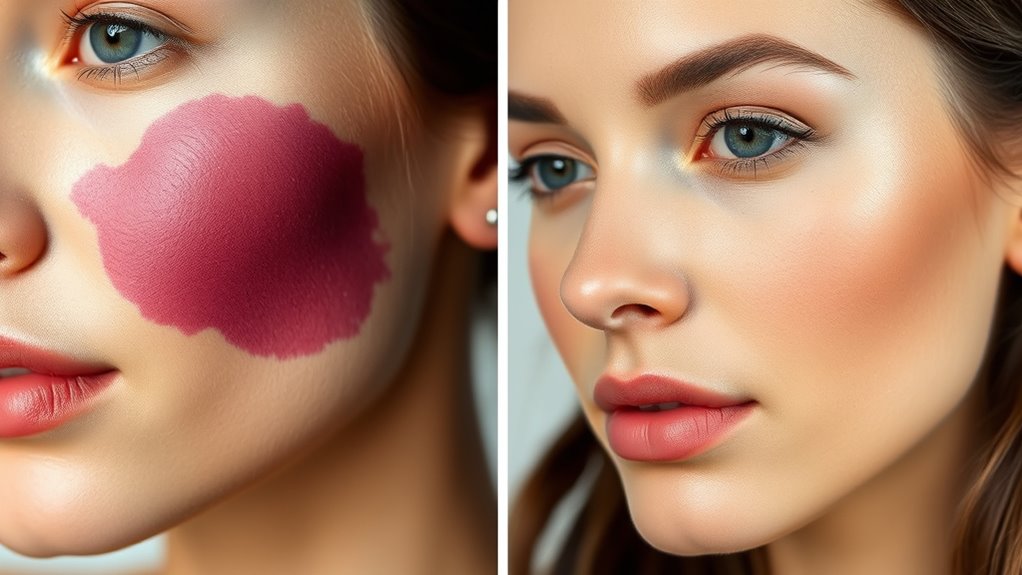
How to Cover a Purple Bruise on Face (With Makeup or Without Makeup)
To cover a purple bruise on your face effectively, start by applying a yellow or orange color corrector to neutralize the purple tone.
Then, layer a concealer that matches your skin color for natural coverage. Blend well and set with translucent powder to prevent smudging.
If you prefer no makeup, use clothing like high necklines, hats, or bold accessories to divert attention.
Want more tips to perfectly hide or speed up healing? You’ll find helpful strategies ahead.
Key Takeaways
- Use a yellow or orange color corrector to neutralize the purple bruise before applying skin-tone concealer for seamless coverage.
- Apply primer, then layer concealer and foundation, blending carefully and setting with translucent powder for long-lasting makeup.
- Wear high-neck clothing, hats, or scarves to physically cover the bruise and divert attention using bold accessories or bright makeup.
- Highlight other facial features with bold lipstick or eye makeup and choose vibrant or patterned clothing to distract from the bruise.
- Use natural remedies like cold green tea bags and arnica gel to speed healing and reduce bruise visibility over time.
Understanding the Formation and Color Changes of Bruises
Although you might not notice at first, a bruise forms when tiny blood vessels beneath your skin break due to an injury, causing blood to leak into surrounding tissues. Right after the trauma, the bruise appears red because of oxygen-rich blood pooling under the skin.
Bruises form when tiny blood vessels break, leaking oxygen-rich blood beneath the skin and causing redness.
As time passes, bruise colors shift from red to blue or purple as the blood loses oxygen and breaks down. Later, green, yellow, and brown hues develop as your body processes the blood components. Understanding these color changes is key when you want to cover up bruises effectively.
When applying makeup for color correction, you need to contemplate the specific bruise colors and your skin tones to choose the right concealer or corrector shades. This approach helps neutralize discoloration and creates a natural finish, ensuring the bruise is less visible.
Knowing the science behind bruises makes it easier to select the best products and techniques for a flawless cover-up.
Essential Supplies for Covering a Purple Bruise
To cover a purple bruise effectively, you’ll need the right makeup essentials like a color corrector palette and a high-coverage concealer. Don’t forget small brushes or sponges for precise application and a setting powder to keep everything in place.
Alongside these, having some non-makeup tools handy will make the process smoother and more efficient.
Makeup Essentials
A few key makeup essentials can make a big difference when you’re covering a purple bruise on your face. Start with a color correcting product in yellow or orange shades to neutralize the purple before applying concealer. Choose a full-coverage, long-lasting concealer that matches your skin tone for the best results.
You’ll also want a primer to smooth your skin and help makeup stay put. For precise application, a makeup sponge or small brushes are invaluable. Finally, set everything with translucent powder or a finishing spray to prevent smudging.
- Yellow/orange color corrector
- Full-coverage concealer matching skin tone
- Primer for smooth base
- Makeup sponge or precise brushes
- Translucent setting powder or finishing spray
Non-Makeup Tools
When you’re covering a purple bruise on your face, having the right non-makeup tools can make all the difference. Essential tools include small, precise brushes and makeup sponges that help you apply color correctors and concealer accurately. Using green color correctors will neutralize redness, while yellow ones target purple hues effectively.
A high-coverage concealer that matches your skin tone blends the corrected area seamlessly. To set your work, translucent or slightly sheer setting powders lock in the makeup and prevent smudging. Additionally, a magnifying mirror is a handy tool for detailed application, ensuring your coverage looks natural and flawless.
With these tools, you’ll achieve a smooth, well-blended finish that conceals the bruise discreetly.
Step-by-Step Makeup Technique for Bruise Concealment
To effectively cover a purple bruise, start with green color correction to cancel out the discoloration before blending it smoothly. You’ll want to layer concealer and foundation carefully to match your skin tone, making sure everything blends seamlessly.
Finally, set your makeup with translucent powder to keep it in place and prevent creasing throughout the day.
Color Correction Basics
Although bruises can be stubborn to hide, you can effectively neutralize the purple tone by using a green color corrector, since green sits opposite purple on the color wheel. This basic color correction technique is key to making your bruise less noticeable. Here’s how to start:
- Apply a green color corrector gently over the bruise with a small brush or fingertip.
- Blend the edges carefully for a seamless progression between your skin and corrector.
- Dab a concealer matching your skin tone on top of the corrected area.
- Blend the concealer softly to avoid harsh lines.
- Layer a thin amount of foundation over the concealer for an even finish.
Mastering these steps will help you neutralize discoloration before moving on to blending and setting.
Blending and Setting
Since neutralizing the purple tone is just the start, the next essential step is blending and setting your makeup to guarantee the bruise stays concealed and looks natural. After applying your green color corrector, gently blend it with a clean finger or brush. Follow with a yellow or peach-toned concealer, blending the edges seamlessly into your skin.
Next, layer a skin-tone concealer over the corrected area using a sponge or brush, pressing and blending for a smooth finish. To lock everything in place and reduce shine, set the area with a translucent powder applied with a fluffy brush, gently patting it on.
Finally, apply a light dusting of foundation or powder over your face to blend the concealment flawlessly into your natural complexion.
Using Color Correction to Neutralize Purple Tones
When you notice a purple bruise on your face, using color correction can make a big difference in hiding it. Color correction works by neutralizing the discoloration based on the color wheel. Since purple is opposite yellow on the wheel, yellow correctors are perfect for canceling out those purple tones.
Using yellow correctors neutralizes purple bruises effectively by leveraging color wheel opposites for flawless coverage.
For deeper or darker bruises, lavender or violet correctors can help balance the hues before you apply concealer.
Here’s how to use color correction effectively:
- Identify the dominant purple shade of your bruise.
- Choose a yellow corrector for lighter purple tones.
- Use lavender or violet correctors for deeper purple bruises.
- Apply a thin layer of the corrector directly on the bruise with a brush or fingertip.
- Blend gently to avoid harsh lines and prepare for concealer application.
This targeted approach ensures your purple bruise fades visually, making concealer more effective for a natural finish.
Applying Concealer and Foundation for a Natural Finish
Before you apply foundation, make sure you’ve properly neutralized the purple bruise with a suitable color corrector, like yellow or green. Once the corrector has settled, use a concealer that matches your skin tone to cover the corrected area. Apply it gently with light, tapping motions to blend it seamlessly, ensuring a smooth gradation between the bruise and your natural skin.
Next, take a damp makeup sponge or brush to blend your foundation over the concealer softly. This step helps avoid cakiness and keeps the finish natural. Be careful not to disturb the color corrector underneath.
After blending, set the concealed area with a translucent powder to prevent creasing and increase the makeup’s longevity without adding extra color. Following these steps will give you a flawless, natural finish that effectively hides the purple bruise while maintaining your skin’s appearance.
Non-Makeup Methods to Hide a Facial Bruise
Although makeup is a common way to cover a facial bruise, you can also use clothing and accessories to hide it effectively. By choosing the right items, you can divert attention from the bruise and feel more confident while it heals.
Here are some practical non-makeup methods for hiding a facial bruise:
- Wear high-neck tops or scarves to cover bruises near the neck or jawline.
- Use statement accessories like large earrings or bold necklaces to draw eyes away from the bruise.
- Put on sunglasses or prescription glasses to conceal bruising around the eyes or nose.
- Try hats or headbands to hide bruises near the forehead or hairline.
- Opt for clothing with vibrant colors or patterns that distract from the affected area.
Strategic use of clothing and accessories can be a quick, effective alternative to makeup for hiding your bruise while you recover.
Home Remedies to Accelerate Bruise Healing
If you want to speed up the healing of a purple bruise on your face, several home remedies can help reduce inflammation and promote recovery. Applying a cold green tea bag for 15-20 minutes constricts blood vessels, which helps reduce bruising and swelling. Using topical vitamin K cream supports bruise healing by enhancing collagen production and repairing blood vessels.
Gently massaging the area with arnica gel improves blood flow, helping to fade the bruise color faster. Elevating the bruised area whenever possible also minimizes blood pooling, further aiding recovery. Additionally, eating foods rich in vitamins C and K—like citrus fruits and leafy greens—strengthens your blood vessels, promoting quicker healing.
These simple yet effective home remedies target both the appearance and underlying cause of bruises, so you can get back to feeling confident sooner.
Tips to Distract Attention From a Bruise on the Face
When you want to divert attention from a purple bruise on your face, using bold makeup or eye-catching accessories can be very effective. By shifting focus to other features, you can create a distraction that helps cover the bruise without drawing unwanted attention. Here are some tips to help you use color and style for this purpose:
- Use bold eye makeup or bright lipstick to draw attention away from the bruise.
- Wear statement jewelry like large earrings or colorful scarves to create a visual cover.
- Apply contouring and highlighting to emphasize other facial areas, minimizing focus on the bruise.
- Choose clothing with high necklines or hats to physically cover or distract from the affected area.
- Incorporate vibrant elements like patterned accessories to shift attention elsewhere.
With these strategies, you can effectively cover the bruise by redirecting attention through color and creative distraction.
Frequently Asked Questions
How to Cover a Purple Bruise With Makeup?
To cover a purple bruise with makeup, start by applying a peach or orange color corrector right on the bruise to cancel out the purple tones. Then, use a concealer that’s a shade lighter than your skin and blend it gently over the corrector.
Set everything with translucent powder to avoid creasing. Finally, blend the edges with a damp sponge and apply your foundation and powder to create a smooth, natural finish.
How to Cover a Bruise on Your Face Without Makeup?
You can cover a bruise on your face without makeup by wearing scarves, hats, or sunglasses to strategically hide the area. Try long-sleeved shirts or statement jewelry to draw attention elsewhere.
Using arnica cream or cold compresses helps reduce the bruise faster, making it less noticeable. Also, avoid heat and keep the bruised area elevated during the first 48 hours to prevent it from getting worse.
What Cancels Out Purple on Face?
Yellow and orange hues cancel out purple on your face because they’re opposite purple on the color wheel. Imagine mixing paint—adding yellow or orange neutralizes that dark purple tone, making it less visible.
If you’ve got a purple bruise or discoloration, applying a yellow concealer can help balance the color. For deeper purples, especially on darker skin tones, orange works better. Then, blend with your foundation for a natural finish.
What Color Cancels Out a Bruise on the Face?
Yellow or peach colors cancel out purple bruises on your face because they’re opposite purple on the color wheel. For deeper bruises with blue or dark purple tones, orange concealers work well.
You can also try green correctors if the bruising has redness. After applying your color corrector, use a skin-tone concealer to blend and finish with translucent powder to set everything and keep the coverage lasting longer.
Conclusion
Now that you know how to tackle that stubborn purple bruise—whether with expert makeup tricks or simple home remedies—you might be wondering which method works best for you.
But here’s the catch: the secret to truly hiding a bruise isn’t just in the products or treatments you use. It’s in how you apply them and the confidence you carry.
Ready to discover the insider tips that will transform your approach completely? Keep reading—you won’t want to miss what’s next.
Mastering the art of how to cover a purple bruise on face can make all the difference in your look and self-esteem.