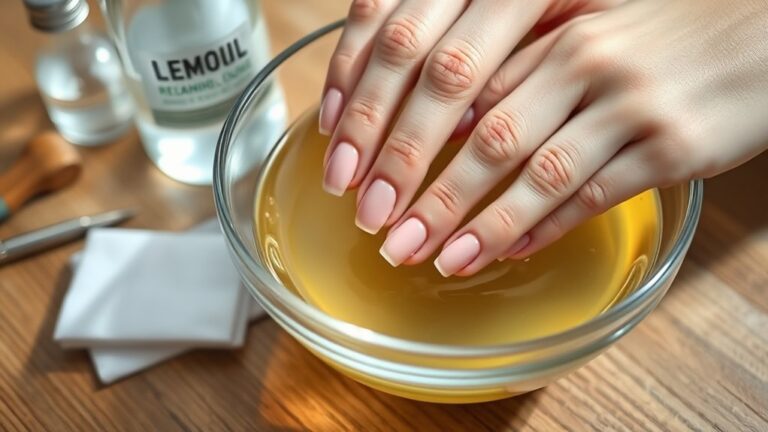
Can I Use Hydrogen Peroxide as Acrylic Liquid
You shouldn’t use hydrogen peroxide as acrylic liquid because it doesn’t have the right chemicals to form or cure acrylic nails. Acrylic liquids contain monomers like methyl methacrylate that properly react with powders to create strong, smooth nails.
Hydrogen peroxide, being an oxidizer, can damage and discolor your nails instead.
Using hydrogen peroxide as acrylic liquid may weaken adhesion and cause brittleness or irritation. It lacks the essential components needed for the polymerization process that acrylic nails require.
This means your nails won’t hold up well and can suffer from damage.
If you want to know why proper acrylic liquids work and how to apply them safely, keep exploring the details. Using the correct acrylic liquid ensures durable, beautiful nails without harm.
Always choose products designed specifically for acrylic nail application.
Key Takeaways
- Hydrogen peroxide is not an acrylic liquid and lacks the necessary monomers for proper acrylic polymerization.
- Using hydrogen peroxide can cause oxidation, discoloration, and weakening of acrylic nails.
- Hydrogen peroxide may damage the nail surface and reduce adhesion, leading to brittle and cracked nails.
- Safe acrylic liquids contain methyl or ethyl methacrylate designed specifically for nail applications.
- Always use commercial acrylic monomer liquids for durability and safe nail application, avoiding hydrogen peroxide.
Chemical Composition of Acrylic Liquids
When you look at the chemical composition of acrylic liquids used for nail enhancements, you’ll find they’re mainly solutions of methyl methacrylate (MMA) or ethyl methacrylate (EMA) monomers mixed with initiators and stabilizers. These monomers are volatile and flammable esters derived from methacrylic acid, specifically designed to polymerize quickly when combined with acrylic powders.
The liquid’s formulation carefully balances viscosity, reactivity, and evaporation rate to ensure ease of use and strong adhesion on nails. You’ll typically see a two-part system: a liquid monomer and a powder polymer. When mixed, they undergo a chemical reaction forming a durable solid.
Importantly, acrylic liquids don’t contain oxidizers like hydrogen peroxide since such compounds would interfere with the polymerization process. This tailored chemical makeup ensures the acrylic liquid works efficiently with powders, producing the hardened nail enhancements you’re familiar with.
Properties and Uses of Hydrogen Peroxide
Why is hydrogen peroxide such a common household chemical? It’s because of its strong oxidizing and disinfectant properties, making it versatile for many everyday uses. You’ll find it mainly in a 3% concentration for home use, while industrial versions can be much stronger.
Hydrogen peroxide is a common household chemical known for its strong oxidizing and disinfectant properties.
Here are some common properties and uses of hydrogen peroxide:
- Disinfection: It kills bacteria and viruses, so you can use it to clean minor wounds or sterilize surfaces.
- Cleaning: It helps remove stains and disinfect household surfaces without harsh chemicals.
- Bleaching: H2O2 is effective in whitening clothes and lightening hair.
- Oxidation: It promotes chemical reactions that can degrade or discolor materials, which is why it’s not suitable as an acrylic liquid in nails.
Understanding these properties helps you see why hydrogen peroxide serves many roles but isn’t a replacement for acrylic liquids in nail applications.
Risks of Using Hydrogen Peroxide in Nail Applications
Though hydrogen peroxide is valued for its cleaning and disinfecting properties, it’s not suitable for use as an acrylic liquid in nail applications. Using it can compromise your nails in several ways, from weakening adhesion to causing physical damage.
Here’s a quick overview of the risks you should consider:
| Risk | Explanation |
|---|---|
| Degradation & Discoloration | Strong oxidizing effect can damage and discolor acrylics |
| Weakened Adhesion | Chemical bonds necessary for durability may break down |
| Surface Damage | Cracking or clouding may appear with concentrated use |
| Skin Irritation | Contact can cause allergic reactions or irritation |
If you use hydrogen peroxide improperly, your nails could turn brittle and prone to breakage. Plus, the risk of irritation on your skin makes it an unsafe choice for nail treatments.
It’s best to avoid hydrogen peroxide as your acrylic liquid to maintain healthy, strong nails.
Safe Alternatives for Acrylic Liquid
Since hydrogen peroxide can’t initiate the polymerization process needed for acrylic nails, you’ll want to use commercial acrylic liquids made from monomers like methyl methacrylate or ethyl methacrylate. These liquids are specially formulated to guarantee proper curing, strong bonding, and lasting durability for your nails.
Using anything else, like hydrogen peroxide, risks weak adhesion and incomplete curing, which compromises both safety and quality.
Here are safe alternatives you should consider:
- Commercial monomer liquids designed for acrylic nail enhancement.
- Ethyl methacrylate-based liquids, known for lower odor and reduced irritation.
- Methyl methacrylate (MMA)-free acrylic liquids, preferred for safety.
- Pre-mixed acrylic gel systems that combine monomer and polymer components.
Always choose products specifically made for nail applications to get the best results and avoid potential damage or health risks.
Best Practices for Acrylic Nail Application
When applying acrylic nails, you’ll want to make certain you’re using the right materials and techniques to achieve a strong, long-lasting result. First, always use the recommended acrylic monomer liquid specified by your product manufacturer. These liquids contain essential monomers like methyl methacrylate or EMA, which polymerize effectively with acrylic powder. Avoid substitutes like hydrogen peroxide, as it lacks the chemical properties needed for proper curing and adhesion.
Begin by prepping your natural nails—clean, buff, and dehydrate them to remove oils. Dip your brush into the acrylic liquid, then into the powder, forming a bead. Apply the bead smoothly and evenly, shaping it as you go. Work efficiently but carefully, allowing the acrylic to set without rushing.
Proper technique and the right materials ensure durable, well-adhered nails. Using incorrect liquids can cause weak, brittle nails prone to lifting or breaking, so stick to trusted acrylic monomers for the best results.
Frequently Asked Questions
Can You Use Hydrogen Peroxide on Acrylic?
Yes, you can use hydrogen peroxide on acrylic, but you need to be careful. Don’t apply it concentrated; always dilute it first to avoid damaging or discoloring the surface. It’s best to test a small, hidden spot before applying it more widely.
Using low concentrations will help disinfect and clean acrylic without harm. Just remember to follow any manufacturer guidelines and avoid using industrial-strength peroxide to keep your acrylic safe.
What Liquid Can Be Used for Acrylic Nails?
Coincidentally, the liquid you need for acrylic nails is precisely designed to work with acrylic powder—monomer liquids like ethyl methacrylate (EMA) or methyl methacrylate (MMA). You can’t just substitute any liquid, like hydrogen peroxide, because it won’t properly cure the powder or bond well.
What Can I Use in Place of Monomer for Acrylic Nails?
You really can’t use anything other than a proper acrylic monomer liquid for acrylic nails if you want good results. Substitutes like hydrogen peroxide or glue won’t bond well or cure properly, leading to weak, brittle nails.
If you’re looking for alternatives, consider gel nails or dip powder systems—they don’t use monomer liquid but still give durable results. Stick to recommended products to keep your nails healthy and strong.
Can I Soak My Acrylic Nails in Hydrogen Peroxide?
Sure, you *could* soak your acrylic nails in hydrogen peroxide if you’re aiming for a brittle, discolored look—like a science experiment gone wrong.
But seriously, short dips in a diluted solution (3-6%) are okay to disinfect. Just don’t leave them soaking too long, or your nails might start to crumble.
Always rinse and dry well afterward to keep your acrylics looking their best instead of like they’ve been through a peroxide bath.
Conclusion
You shouldn’t use hydrogen peroxide as acrylic liquid because it’s chemically different, less effective, and potentially harmful. Just like acrylic liquid is designed to bond and cure nails properly, hydrogen peroxide is meant to disinfect and bleach.
Using the right product guarantees safety, durability, and beauty. Don’t risk damage, don’t risk irritation, and don’t risk disappointment. Choose the correct acrylic liquid, follow best practices, and enjoy healthy, stunning nails every time.
Remember, hydrogen peroxide is not a substitute for acrylic liquid, so always use proper acrylic liquid for the best results.