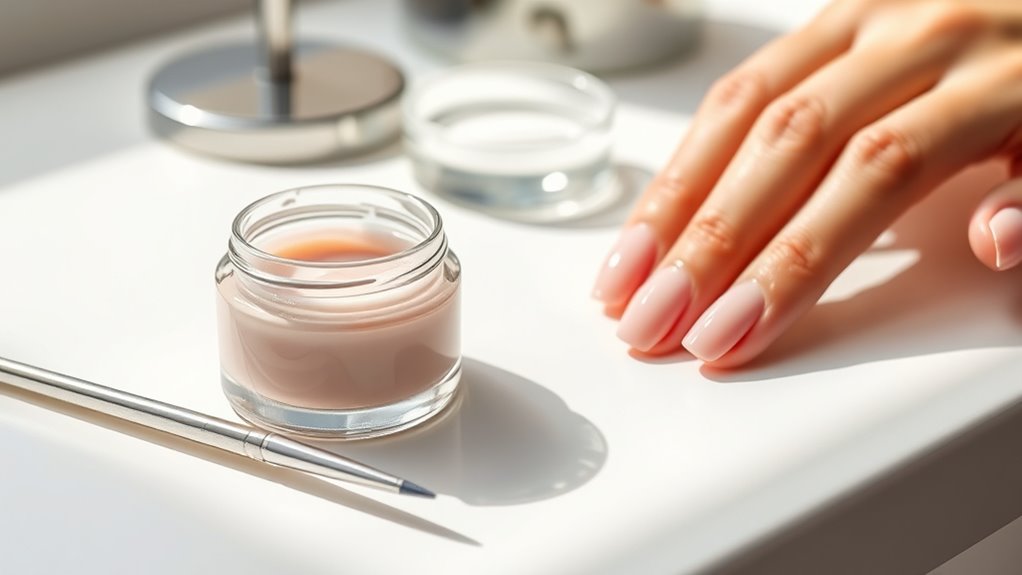
Dip Powder Base Coat Substitute
You can substitute a traditional dip powder base coat with gel base coats or acrylic bonding primers that provide strong adhesion and durability. These alternatives work well as a dip powder base coat substitute, offering reliable performance for your nails.
Gel base coats cure under UV/LED light, forming a sealed surface to prevent lifting and chipping.
Acrylic primers help the powder stick well when fully dry.
Just make sure your substitute is compatible with your dip powder brand and follow proper curing or drying steps.
If you want to know how to choose and apply these alternatives effectively, keep exploring.
Key Takeaways
- Gel base coats cured under UV/LED light can substitute traditional dip powder base coats for enhanced adhesion and durability.
- Clear bonding liquids or gel primers formulated for dip powders serve as effective base coat alternatives.
- Acrylic bonding liquids or non-acidic nail primers can be used if fully dry before dipping to ensure proper adhesion.
- Compatibility with the dip powder brand is crucial when choosing any base coat substitute to prevent lifting and chipping.
- Proper curing or drying of substitutes is essential to achieve a strong bond and long-lasting manicure results.
Understanding the Role of a Dip Powder Base Coat
Although it might seem like just another step, the dip powder base coat plays a crucial role in your manicure by bonding the powder to your natural nails. This base coat contains specialized bonding agents and resins that are designed specifically for dip powder applications. Unlike regular nail polish, it forms a strong, durable foundation that holds the powder securely in place.
When you apply the dip activator, it reacts with the base coat, hardening the layers and preventing any lifting or chipping. This chemical interaction enhances the overall durability of your manicure, ensuring it lasts longer and maintains its flawless appearance. Without a proper dip powder base coat, the powder wouldn’t adhere as effectively, leading to premature wear.
Alternatives to Traditional Dip Powder Base Coats
When you don’t have a traditional dip powder base coat on hand, there are several effective alternatives you can use to guarantee your powder adheres properly. These options maintain strong adhesion and durability without compromising your manicure’s quality.
If you lack a traditional dip powder base coat, several alternatives ensure strong adhesion and lasting results.
- Gel base coat: Cure a clear gel base coat under UV or LED light before dipping. This forms a solid foundation for the powder.
- Bonding agents: Clear gel primers or bonding agents designed for dip powders enhance adhesion and replace standard base coats.
- Dip liquids: Some resin or acrylic bonding liquids made for nail enhancements can act as alternative adhesion promoters.
- Nail primers: Specific nail primers formulated for dip powders offer excellent grip, eliminating the need for a traditional base coat.
Using these alternatives guarantees your dip powder manicure stays intact, giving you flexibility when you’re out of your usual base coat.
Gel Base Coats as Effective Substitutes
You can use gel base coats as a strong alternative to traditional dip base coats, but you’ll need to cure them properly under UV or LED light to guarantee the powder sticks well. This method creates a durable foundation that helps prevent lifting or chipping.
Just make sure to test your gel formula first to get the best results.
Gel Base Coat Benefits
Since gel base coats cure under UV or LED light, they make a strong adhesive layer that can easily replace dip powder base coats. When you use a gel base coat, you benefit from:
- Enhanced adhesion that prevents lifting and chipping of your dip powder nails.
- A durable, glossy finish that boosts the overall look and longevity.
- Compatibility with various dip powders and top coats for versatile nail designs.
- Improved smoothness and shine compared to traditional dip powder base coats.
Proper Curing Techniques
Gel base coats gain their strength and durability from proper curing under UV or LED light, which is essential to replacing dip powder base coats effectively. When you apply a thin, even layer of gel base coat, curing it for 30-60 seconds according to the manufacturer’s instructions ensures a solid, sealed foundation. This step is vital because proper curing creates a durable surface that holds dip powder securely, preventing lifting or chipping during wear.
If you don’t cure the gel base coat adequately, it can remain sticky or soft, which weakens adhesion and increases the risk of premature failure. To get the best results, always follow the recommended curing times and light specifications. That way, the gel base coat performs comparably to traditional dip powder bases, making it a reliable substitute.
Using Acrylic Primers for Dip Powder Applications
If you’re thinking about using acrylic primers instead of a dip powder base coat, it’s important to understand how their adhesion properties differ. Not all primers are nail-friendly, so choosing one with the right compatibility is key to avoid damage.
Applying the primer correctly can boost durability, but overuse might dry out your nails, so follow instructions carefully.
Acrylic Primer Compatibility
Wondering how acrylic primers can fit into your dip powder routine? Choosing the right acrylic primer is essential for dip base compatibility and overall nail durability. Here’s what you should keep in mind:
- Select a non-acidic acrylic primer specifically formulated for nails to avoid damage.
- Apply a thin layer of acrylic primer and ensure it’s completely dry before dipping.
- Confirm the primer creates a tacky surface, which enhances powder adhesion.
- Avoid primers not designed for dip powder systems, as incompatibility can cause lifting or bubbling.
Using the right acrylic primer can strengthen the bond between your natural nail and dip powder, improving longevity.
Adhesion Differences Explained
When you choose an acrylic primer for your dip powder nails, you’re tapping into a different kind of adhesion than what traditional dip base coats offer. Acrylic primers contain strong adhesion agents like methacrylate monomers that bond tightly to your natural nails, improving powder adherence.
Unlike a dip base, which mainly acts as a sticky layer for the powder, acrylic primers create a chemical bond that reduces lifting and chipping.
| Feature | Acrylic Primer |
|---|---|
| Adhesion Type | Chemical bonding |
| Composition | Methacrylate monomers |
| Result | Durable, chip-resistant bond |
Keep in mind, acrylic primers don’t replace the protective function of a dip base or top coat but excel at boosting adhesion.
Application Tips and Risks
Although acrylic primers can boost adhesion for dip powder nails, you need to be cautious with their application to avoid damaging your natural nails. Using acrylic primers as a base coat substitute carries certain risks, so follow these application tips carefully:
- Use primers specifically formulated for dip powder systems to reduce risk of nail brittleness and peeling.
- Avoid applying acrylic primer directly over natural nails to prevent over-dehydration.
- Follow manufacturer instructions strictly; improper use can cause lifting, bubbling, or uneven wear.
- Don’t overuse acrylic primers—too much can damage the nail plate and compromise dip powder adhesion.
Compatibility Considerations When Choosing a Substitute
Since dip base coats are specially formulated to bond with dip powders, you’ll need to carefully consider compatibility if you’re thinking about using a substitute. Regular gel base coats can sometimes work if properly cured under UV or LED light, but not all substitutes guarantee strong adhesion. Using a product not designed to bond with dip powders often results in poor compatibility, leading to lifting or peeling over time.
For example, regular nail polish top coats aren’t usually compatible directly on dip nails and can cause the finish to peel or chip quickly. To avoid these issues, test any substitute on a small area first to check for proper adhesion and durability. Ensuring the substitute’s chemical makeup can bond well with the powder is key to preventing premature peeling and maintaining a smooth, long-lasting finish.
Prioritizing compatibility will help you achieve better results and avoid frustrating wear problems.
Best Practices for Applying Dip Powder With Substitute Bases
If you’re using a substitute base coat for dip powder, applying it correctly is essential to guarantee strong adhesion and a smooth finish. To get the best results with your alternative base, follow these key steps:
- Choose a gel or regular base coat specifically made for nail enhancement, ensuring it doesn’t contain ingredients that could interfere with the dip powder’s bonding.
- Apply a thin, even layer of the base coat; if it’s gel, cure it properly under UV/LED light before dipping into the powder.
- Perform a patch test or swatch first to confirm compatibility and avoid issues like lifting or peeling after application.
- After the dip powder cures, seal your nails with a compatible top coat to lock in durability and prevent chipping.
Frequently Asked Questions
What Can I Use Instead of Dip Powder Base Coat?
You can use a gel base coat cured under UV or LED light instead of a dip powder base coat. Avoid regular nail polish base coats since they don’t stick well and can cause lifting.
If you don’t have gel base, try clear builder gel or an acrylic primer as a base. Applying a thin clear gel or top coat before dipping also helps. Using a bond or adhesion promoter can improve powder grip, too.
What Can I Use if I Don’t Have a Base Coat?
When you find yourself without a base coat, think of it as trying to build a castle without foundations—you’ll want something sturdy to start with. You can use a gel base coat cured under UV or LED light as a solid alternative.
If that’s not available, a thin layer of clear builder gel or even a nail strengthener with adhesive qualities might do in a pinch, but remember, they might not hold up as long.
Do You Need Base Coat for Dip Powder?
Yes, you do need a base coat for dip powder. It helps the powder stick properly and creates a strong bond that makes your manicure last longer. Without it, your nails might chip or lift quickly, leaving an uneven finish.
While some gel base coats can work temporarily, using a dedicated dip base coat gives you the best results and durability. So, don’t skip this important step!
Can I Use a Topcoat as a Basecoat for Nail Polish?
You might think using a topcoat as a basecoat could work, but it usually won’t. Topcoats aren’t made to bond polish to your nails; they seal and add shine instead.
If you skip a proper basecoat, your polish may chip faster and peel off sooner. For a long-lasting manicure, it’s best to stick with a dedicated basecoat that’s designed to create a strong bond between your nail and the polish.
Conclusion
Think of your nails as a canvas, where the base coat is the sturdy foundation holding your masterpiece. When traditional dip powder base coats aren’t around, gel base coats and acrylic primers step in like trusted brushes, ensuring your colors stay vibrant and strong.
By choosing the right substitute and applying it carefully, you’re planting seeds in a garden that’ll bloom beautifully. This lets your nails shine with lasting strength and style.
Using a reliable dip powder base coat substitute is key to achieving a flawless finish and long-lasting wear.


