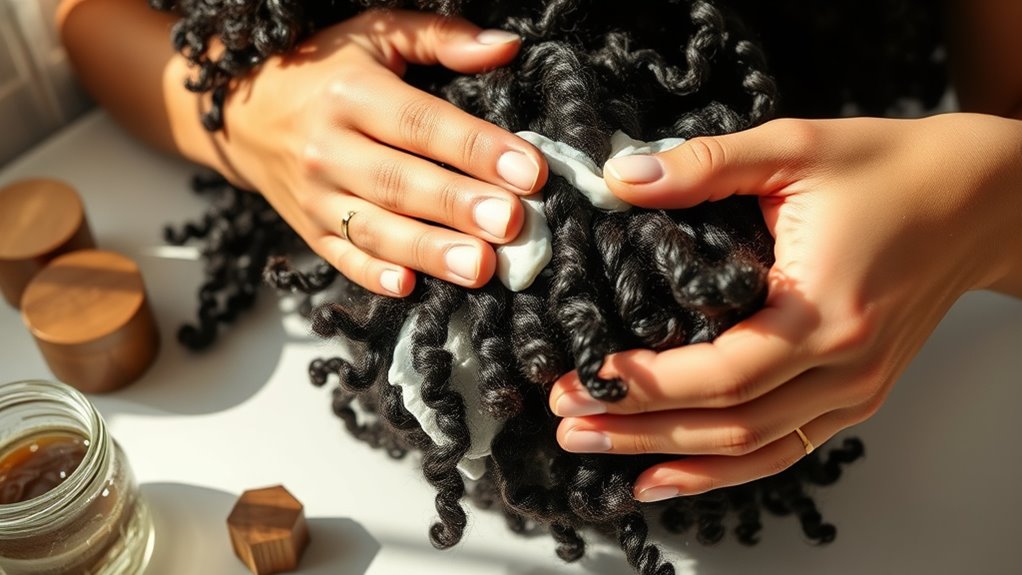
How to Wash 4c Hair and Take Care It for Long Lasting
To wash your 4C hair and take care of it for long-lasting health, start by gently detangling and sectioning it. Use a sulfate-free shampoo to cleanse your scalp twice. This helps maintain moisture and prevents dryness.
Next, apply a hydrating conditioner or deep conditioner, leaving it on for 10 minutes before rinsing with cool water. Detangle your hair while it is wet to minimize breakage.
Moisturize using the L.O.C. method—liquid, oil, cream—to effectively seal in moisture. Finish with protective styles and wear a satin bonnet or use satin pillowcases at night to prevent breakage and retain hair health.
Keep going to discover detailed care tips for maintaining your 4C hair in the best condition.
Key Takeaways
- Gently detangle 4C hair with fingers or a wide-tooth comb before washing to prevent breakage and reduce tangles.
- Use sulfate-free shampoos and wash in sections, focusing on the scalp while keeping twists intact to maintain moisture.
- Deep condition hair for at least 10 minutes, then rinse with cool water to lock in hydration and soften strands.
- Detangle hair when wet and coated with conditioner using gentle motions from ends to roots to avoid damage.
- Moisturize with the L.O.C. method (liquid, oil, cream) and protect hair with satin or silk at night to retain moisture.
Understanding the Unique Characteristics of 4C Hair
Since 4C hair has the tightest curl pattern in the type 4 category, you’ll notice its densely packed coils often form a zig-zag pattern with significant shrinkage—sometimes up to 75% of its actual length. This unique structure makes 4C hair delicate and prone to breakage, so understanding its characteristics is key to effective hair care.
The follicle shape of 4C hair is oval or flattened, contributing to those tight curls that require extra moisture. Because of its coil pattern, 4C hair tends to be very dry, meaning regular hydration is essential to maintain its health. When caring for your 4C hair, you’ll want to use products that provide deep moisture without weighing your hair down.
Avoid harsh treatments and excessive manipulation, as they can damage the fragile strands. By recognizing these traits, you can tailor your hair care routine to keep your 4C hair strong, moisturized, and thriving.
Preparing Your Hair for Wash Day
Before you start washing your 4C hair, preparing it properly can make a big difference in preventing breakage and ensuring a thorough cleanse. Begin by gently detangling your hair with a wide-tooth comb or your fingers to avoid unnecessary breakage. Next, section your hair into manageable parts like medium-sized twists or coils; this makes it easier to cleanse deeply.
Before applying shampoo, make sure your hair is thoroughly saturated with lukewarm water to loosen dirt and help prevent tangles. Applying a pre-shampoo treatment at this stage is essential—it helps soften your strands and guarantees even distribution of cleansing products. Focus shampoo mainly on your scalp to cleanse roots without drying out the strands.
Taking these preparatory steps sets the foundation for a gentle, effective wash day routine that maintains your hair’s health and strength.
Step-by-Step Washing Process for 4C Hair
When you start washing your 4C hair, sectioning it into medium-sized twists makes the process much easier and helps prevent tangling. Begin by shampooing twice, focusing on your scalp and roots to cleanse effectively while keeping your twists intact. Rinse thoroughly before applying conditioner generously from mid-lengths to ends.
Use a wide-tooth comb to gently detangle as you rinse out the conditioner. Next, deep condition for at least 10 minutes, keeping your twists or plaits to maximize moisture absorption. After rinsing, carefully untwist and re-twist each section with leave-in conditioner and oil to lock in moisture.
To summarize the process:
- Section hair into medium-sized twists
- Shampoo twice, focusing on the scalp
- Condition generously and gently detangle
- Deep condition and seal with leave-in products
Effective Detangling Techniques for Type 4 Hair
Although detangling type 4 hair can feel challenging, handling it gently and methodically will help you avoid breakage and preserve your natural coils. Start by detangling your hair when it’s soaking wet and coated with conditioner or a detangling product, which softens strands and minimizes damage. Use a wide-tooth comb or your fingers to work through your coils slowly, always moving from the ends toward the roots.
Be gentle—avoid forceful pulling to protect your hair’s delicate structure. Section your hair into manageable parts to ensure even detangling and prevent new tangles during the process. After detangling each section, twist or braid it to keep curls intact and reduce re-tangling before styling or drying.
Incorporating natural oils during detangling can provide extra slip and nourishment, making the process smoother and helping maintain your hair’s health. Taking your time with these techniques ensures your type 4 hair stays strong and beautifully defined.
Moisturizing and Sealing Using the L.O.C. Method
To keep your 4C hair hydrated, start by applying a liquid like water or leave-in conditioner to provide essential moisture.
Next, use an oil to seal in that moisture and prevent it from escaping.
Finish with a cream to lock everything in, ensuring your hair stays soft and nourished longer.
Liquid Application Importance
Why is liquid application so vital in caring for 4C hair? It’s the first and most essential step to hydrate your strands effectively. Without proper liquid application, your hair may remain dry and prone to breakage.
By applying water or a water-based leave-in conditioner, you open the cuticles, allowing your hair to absorb moisture better. This step guarantees even hydration, reducing shrinkage and enhancing curl definition.
Keep these points in mind:
- Liquid application thoroughly hydrates 4C hair
- Opens hair cuticles for better moisturizer absorption
- Reduces dryness and shrinkage considerably
- Prepares hair for long-lasting moisture retention
Mastering this step sets the foundation for healthy, soft, and well-moisturized 4C hair.
Oil and Cream Seal
A key step in caring for your 4C hair is the oil and cream seal, often done through the L.O.C. method. After applying liquid, you use oil to lock in moisture, especially while your hair is still damp for better absorption.
Following oil, applying cream creates a protective barrier that keeps your hair soft and shiny longer. This method guarantees long-lasting hydration and reduces dryness and breakage.
| Step | Purpose | Tips |
|---|---|---|
| Liquid | Moisturize hair | Use water or leave-in |
| Oil | Seal in moisture | Apply on damp hair |
| Cream | Protect & soften | Use thick, nourishing cream |
| Result | Long-lasting hydration | Repeat regularly |
Protective Styling Tips to Maintain Hair Health
Protective styles like braids and twists help you reduce daily manipulation and prevent breakage in your 4c hair.
To keep your hair healthy overnight, make sure you cover it with a silk or satin scarf or use a matching pillowcase to reduce friction.
These simple steps can make a big difference in maintaining your hair’s strength and moisture.
Benefits of Protective Styles
Even though you might want to style your 4C hair often, minimizing manipulation through styles like braids, twists, or bantu knots can considerably reduce breakage and help your hair retain length. Protective styles are essential for moisture retention and overall hair health. By limiting daily handling, you allow your strands to stay strong and hydrated.
Here are some benefits of protective styles:
- Reduce breakage by minimizing hair manipulation
- Promote moisture retention by sealing in hydration
- Extend time between washes, supporting scalp health
- Prevent tension and damage when installed and removed properly
Incorporating these styles thoughtfully can help you maintain healthy, long-lasting 4C hair with less effort and better results.
Nighttime Hair Protection
Since low-manipulation styles like braids and twists help keep your 4C hair healthy during the day, it’s just as important to maintain that care overnight. Protective styles such as loose twists or bantu knots can prevent tangling and breakage while you sleep, promoting moisture retention.
Before bed, apply a light layer of oil or moisturizer to lock in hydration. Then, cover your hair with a silk or satin bonnet, scarf, or use a silk pillowcase to reduce friction and prevent moisture loss. Avoid cotton pillowcases since they absorb moisture and cause frizz.
Recommended Products and Ingredients for 4C Hair Care
When choosing products for your 4C hair, you’ll want to focus on those that nourish without stripping natural oils. 4C curls thrive with gentle care, so avoid products that contain sulfates, silicones, or parabens as they can dry out your delicate coils.
Instead, opt for sulfate-free shampoos designed for curly hair types, which cleanse without harshness.
To keep your hair healthy and moisturized, look for ingredients like aloe vera, shea butter, and argan oil. These hydrate and strengthen your hair, maintaining its natural pattern and bounce.
Oils rich in fatty acids, such as grapeseed and castor oil, are excellent for sealing in moisture and promoting growth.
Here are some recommended product features for your 4C hair care:
- Sulfate-free shampoos like Hydration Shampoo
- Deep conditioners with Curlsmith Double Cream or Curl Conditioning Oil-in-Cream
- Natural oils like grapeseed, castor, and sea moss extract
- Ingredients such as aloe vera, shea butter, and argan oil
Frequently Asked Questions
What Is the Best Way to Wash 4C Hair?
The best way to wash your 4C hair is to shampoo twice, focusing on your scalp to remove buildup without stripping natural oils. Use a sulfate-free, moisturizing shampoo to keep your hair hydrated. Detangle in sections while applying conditioner with a wide-tooth comb.
Rinse thoroughly, twisting your hair to lock in moisture. Finish with a deep conditioning treatment for 10–30 minutes, rinsing while twists are still intact to seal in moisture.
How Often Should 4C Hair Be Washed?
You might think washing your 4C hair every day keeps it cleaner, but it actually strips essential oils. Ideally, you should wash your hair once a week to maintain moisture and scalp health.
If your scalp isn’t too oily or active, stretching washes to every two to four weeks can help preserve natural oils and prevent dryness. Just listen to your hair’s needs and adjust accordingly.
How to Take Care of Long 4C Hair?
To take care of your long 4C hair, you’ll want to moisturize daily using the LOC method—liquid, oil, then cream—to keep it hydrated. Always detangle gently with a wide-tooth comb or your fingers, starting at the ends.
Protect your hair at night with a satin or silk scarf to prevent breakage. Regular trims every 8-12 weeks will keep your ends healthy and promote growth, too.
What Should I Do After Washing 4C Hair?
After washing your 4C hair, treat it like a delicate treasure—gently detangle with your fingers or a wide-tooth comb while it’s still damp to avoid breakage.
Lock in moisture with a leave-in conditioner, then seal it with a light oil to keep your curls hydrated and defined.
Finish by styling into protective twists or braids, letting your hair air dry to preserve its natural beauty and strength.
Conclusion
Taking care of your 4C hair is all about understanding its unique needs and staying consistent. Did you know that 4C hair can shrink up to 75%, making gentle detangling and moisturizing essential? By following the right washing steps and using the L.O.C. method, you’ll keep your hair healthy and strong.
Remember, protective styles help reduce breakage and maintain moisture, so treat your hair with patience and care for long-lasting beauty. Proper washing and care routines are key to maintaining the health and vitality of your 4C hair. Consistently applying these practices will ensure your hair stays beautiful and resilient over time.